March 8, 2026
Designing with Purpose: The Impact of Female-Led Design Teams
Opinion
International Women’s Day provides an opportunity to reflect on the influence of women in industries that shape how we live and work. At Spaceworks, we understand that in commercial design, female leadership is not simply about representation. It brings different perspectives to how spaces are conceived, how teams collaborate, and how environments ultimately support people and performance.
Female-led commercial design firms are quietly repositioning how businesses think about space, not through trends or aesthetics, but through a deeper understanding of people, behaviour and long-term outcomes. At Spaceworks, we are proud to be part of this shift, with a 100% female leadership team and a studio where more than 80% of our designers are women.
As Spaceworks CEO Lizzi Whaley explains:
“Design should never start with what looks good. It should start with understanding how people live, work and move through a space.”
This shift is not about gender as a headline. It is about perspective. When female commercial interior designers prioritise listening, adaptability and human experience, design decisions move beyond surface-level appeal and begin to support real business goals.
Why Leadership Perspective Matters in Commercial Design
Commercial and care environments are not static. They are living systems shaped by the people who use them and by the pressures they face. From staff retention and customer engagement to operational efficiency and long-term adaptability, the lived experience of workspaces helps to shape how a business performs.
Leadership teams that value diverse perspectives tend to approach design differently. They ask more questions before proposing solutions. They consider how environments feel as much as how they function. They recognise that productivity, trust and loyalty are often influenced by subtle details rather than bold statements.
This is where female-led commercial design firms often bring a distinctive approach. Their leadership styles commonly centre on collaboration, clarity and long-term thinking rather than one-off impact. That mindset naturally translates into environments that support change, growth and human connection.
How Female-Led Commercial Design Firms Influence Outcomes
Design decisions are rarely neutral. Every choice, from layout and lighting to material selection and furniture scale, influences behaviour. Leadership shapes how those choices are made and why they are made.
Listening before designing
One of the most consistent strengths of female-led leadership is a strong culture of listening.
This sits at the heart of the Spaceworks design process. As Lizzi puts it:
“Great design starts with listening. When you truly understand how people experience a space day to day, the design decisions become much clearer.”
In commercial design, this means spending more time understanding how a business operates before moving into concepts or layouts.
Rather than defaulting to a fixed formula, teams are more likely to:
- Explore how staff move through a space during peak and quiet periods
- Consider emotional responses such as comfort, confidence and belonging
- Factor in future change rather than designing for a single moment in time
This approach results in environments that work harder over the long term, supporting both people and performance.
Designing for real life, not ideal scenarios
Lived experience matters. Leadership teams that prioritise people and real-world experience tend to think about how spaces are used in practice rather than how they appear in presentations.
This awareness can be seen in:
- Workplaces designed for focus as well as collaboration
- Retail spaces that guide flow intuitively rather than forcing behaviour
- Hospitality environments that feel welcoming without sacrificing efficiency
- Care settings that balance dignity, safety and warmth
These outcomes reflect the impact of female-led design company thinking, where practical use, emotional comfort, and operational needs are considered together rather than in isolation.
Long-term relationships over short-term wins
Another defining characteristic of female-led commercial design firms is a strong focus on long-term relationships. When leadership prioritises trust and consistency, design becomes part of an ongoing partnership rather than a single transaction.
This mindset supports:
- Consistent rollout strategies across multiple sites
- Design systems that can evolve with a business
- Clear communication during complex projects
- Stronger alignment between budget, timeframes and expectations
For clients operating at scale, particularly in retail, banking, aged care and hospitality, this approach delivers stability and confidence across every stage of delivery.
Design As a Tool For Business Performance
Commercial design is often misunderstood as a visual exercise, when in reality it is a strategic tool that shapes how people behave, interact and perform within a space.
“Good design isn’t just about how a space looks. It’s about how it works for the people using it every day.” — Lizzi
Leadership that recognises this connection approaches design with intent, considering how comfort, usability and layout influence employee retention, customer engagement and day-to-day efficiency. Rather than focusing on surface statements, design choices support how a business actually operates.
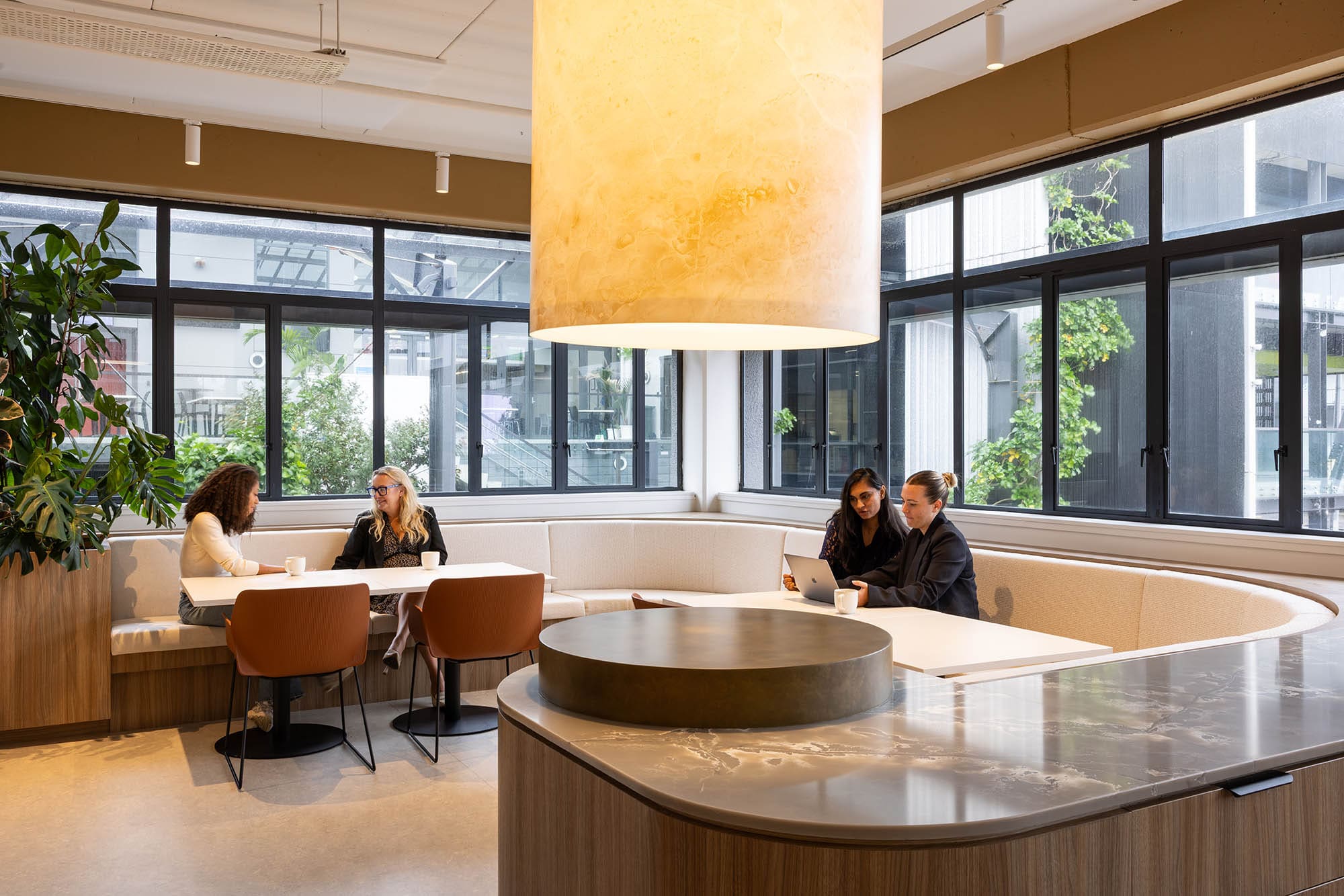
This becomes particularly evident in workplace environments. In a recent office refurbishment for realestate.co.nz, Spaceworks re-planned the workplace to better support collaboration, focused work, and hybrid working patterns. By introducing additional meeting rooms, quiet areas, and a central social hub, the space now allows staff to choose environments that best support their day-to-day work.
As the client explains:
“The improved flow and functionality have made the office a more dynamic space that’s aligned with how we operate today.”
This is where the impact of female led design company leadership becomes clear. By balancing empathy with strategy, decisions are informed by real usage patterns rather than assumptions or trends. The result is environments that support operational flow, reflect brand values in practical ways and deliver outcomes that make sense commercially as well as experientially.
Culture Shapes Design Outcomes
Design culture does not exist separately from business culture. The way a team collaborates internally often shapes the environments it creates for others. Organisations led by women frequently place strong value on clarity of roles, open communication and shared responsibility, creating teams that work with purpose rather than hierarchy. Mutual respect across disciplines becomes part of the way decisions are made, not just of how projects are delivered.
In commercial design, this approach leads to smoother project delivery, stronger coordination among designers, project managers, and contractors, and outcomes that feel considered rather than imposed. It also provides the flexibility to assemble the right mix of specialists for each project, responding to sector needs, scale, and complexity, rather than forcing a one-size-fits-all structure. The result is a design that is more adaptable, practical and aligned with real-world demands.
Why This Matters Now
Businesses across New Zealand are navigating constant change. Hybrid work, shifting customer expectations, tighter budgets and evolving compliance requirements are placing increasing pressure on physical environments to work harder and adapt faster. As these demands grow, the role of space is no longer peripheral to performance.
There is now wider recognition that how a space is designed influences wellbeing and focus, shapes customer perception and trust, supports community connection and contributes to long-term business resilience. Female-led commercial design firms, like Spaceworks, are well-positioned to respond to this complexity because their leadership reflects the realities of modern work and life. By acknowledging that people do not operate in isolation, they design environments that support connection, adaptability and sustained performance over time.
Leadership in Practice, Not Theory
The true value of female leadership-led design is seen in how it operates day-to-day. Businesses that embed these values into their structure tend to deliver more consistent outcomes across sectors and regions.
To understand how this leadership approach shapes real projects and long-term partnerships, you can learn more about Spaceworks and its people-centred philosophy as a female-led commercial interior design firm through their story and team.
Designing With Purpose, Delivering With Clarity
Purpose-led design is not about making statements. It is about making thoughtful decisions that support people, operations and growth over time.
International Women’s Day is not about suggesting one perspective is better than another. It is about recognising that diverse leadership experiences bring different ways of thinking, questioning, and problem-solving. In design, those perspectives help create environments that work better for the people who use them every day.
From workplace and retail environments to aged care and hospitality, Spaceworks uses design as a tool for better business outcomes. Talk to our team today about a design partnership that ultimately centres the people who use your spaces.